How to Write Content for AI Answers in 2026
In 2026, content no longer competes only with other articles. It competes with the answer itself.
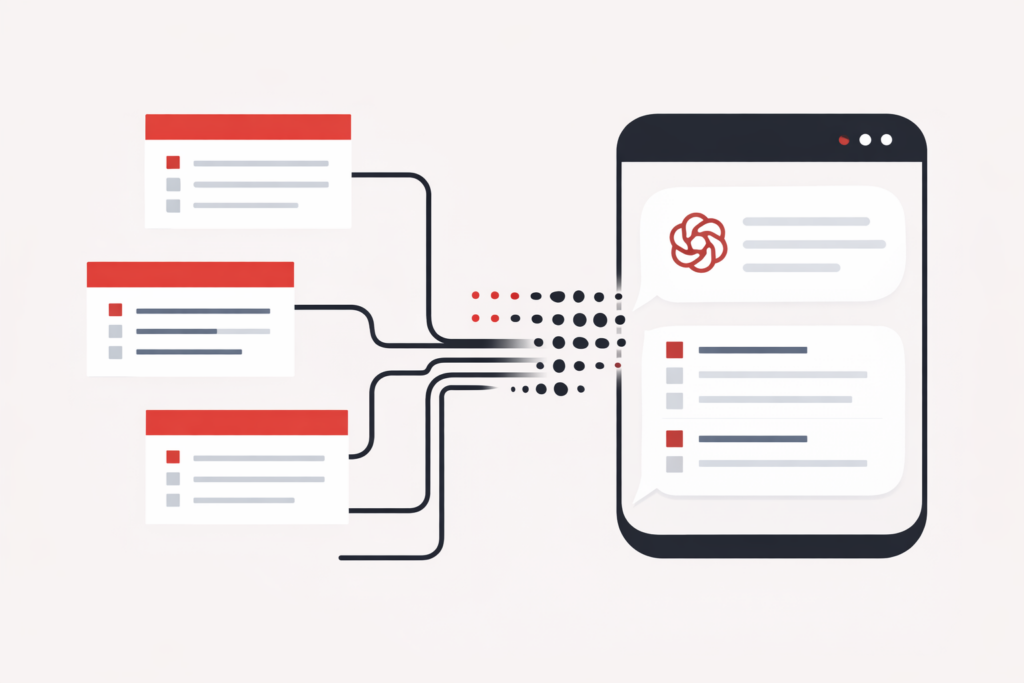
When someone asks a question inside an AI interface, they are not skimming ten blue links. They are consuming a synthesized response that feels confident, final, and often brand-less. The quiet shift is that AI answers are becoming the default front door to discovery, while traditional traffic is becoming a secondary effect. If your content is not structured to be used by AI systems, it will not be surfaced, cited, or remembered.
This is not a theoretical future. According to Gartner, by 2026 over 25 percent of organic search traffic is expected to shift toward AI-driven answer engines and conversational interfaces. That means a meaningful portion of your audience will never see your website unless an AI chooses your content as part of its response.
Writing for AI answers is not about gaming models or stuffing prompts. It is about clarity, authority, and structure at a level most content teams were never forced to master. The brands that win in this environment will feel obvious in hindsight.
Here is how to write content that AI answers actually pull from in 2026, and why most content will quietly fail to do so.
Understand How AI Answers Are Built
AI answer engines do not “read” like humans. They ingest, score, cross-reference, and synthesize. Models trained and deployed by platforms like OpenAI, Google, and emerging answer engines such as Perplexity rely on patterns that signal trustworthiness and usefulness at scale.
They favor content that does three things consistently.
First, it answers a clearly defined question. Second, it does so in a way that can be summarized without losing meaning. Third, it aligns with other credible sources across the web.
Think of AI as a brutally efficient editor. Anything vague, meandering, or performative gets cut.
A useful mental model is this: if your article were reduced to five bullet points by an assistant, would those bullets still be accurate, specific, and valuable? If not, your content is already invisible.
Write Like You Expect to Be Quoted
In 2026, the most valuable content is not what ranks first. It is what gets quoted.
AI answers often pull short, declarative statements that resolve uncertainty. They prefer sentences that sound complete on their own, without context, qualifiers, or throat clearing.
For example, compare these two approaches.
“Many brands are starting to think about how AI might impact search behavior in the coming years.”
Versus:
“By 2026, AI answers are replacing traditional search clicks for high-intent informational queries.”
The second sentence gives an AI system something it can reuse with confidence. It is specific, time-bound, and assertive. Even if the model reframes it, the core idea survives compression.
As a rule, every section of your content should contain at least one sentence that could stand alone as an answer. If you never write those sentences, AI will find them somewhere else.
Download The Checklist Today
Structure Content Around Explicit Questions
One of the biggest mistakes advanced marketers still make is writing content around themes instead of questions.
AI answers are question-driven by design. They respond to prompts like “How does X work,” “What is the difference between Y and Z,” and “What should I do if…”
Your content should mirror that structure openly, not implicitly.
Strong AI-friendly articles use clear subheads that map directly to real questions. Not poetic framing. Not clever metaphors. Real questions your audience would actually ask.
For example:
-
What Is AI Answer Optimization?
-
How Do AI Models Decide Which Sources to Use?
-
What Content Formats Perform Best in AI Answers?
-
What Should Brands Stop Doing Right Now?
These subheads do more than improve scannability. They give AI systems clear anchors to extract from. They reduce ambiguity about what problem each section solves.
This approach aligns directly with how Hawke Media frames intentional, instructional content that empowers the reader rather than impresses them, as outlined in internal editorial standards.
Prioritize First-Principles Explanations
AI systems are suspicious of surface-level tactics. They favor content that explains why something works, not just what to do.
This is where many SEO-trained writers struggle. They are used to listing steps without context, or tools without logic. AI answers reward the opposite.
If you say, “Use structured headings to improve AI visibility,” you must follow with an explanation of how structured headings reduce ambiguity for language models and increase extraction accuracy.
First-principles explanations travel better across models. They remain useful even as interfaces change. They also tend to be cited more often because they generalize well.
A helpful test is to ask whether your explanation would still make sense to someone encountering the concept for the first time. If it relies on assumed knowledge, AI is less likely to trust it.
Reduce Brand Ego, Increase Signal
This is uncomfortable for a lot of teams. AI answers do not care about your brand story unless it adds explanatory value.
Overly promotional content is often ignored or downweighted because it introduces bias without utility. Models are trained to prefer neutral, informative language when answering general questions.
That does not mean removing your point of view. It means earning it.
The strongest brand presence in AI answers comes from being consistently useful, not consistently visible. When your explanations are clear and your insights are grounded, attribution happens naturally.
In practice, this means fewer branded frameworks that only make sense on your site, and more industry-level clarity that others would agree with.
Ironically, this restraint often leads to more authority, not less.
Write With Compression in Mind
AI answers compress content aggressively. Your job is to make sure meaning survives that compression.
Avoid long dependency chains where one sentence only makes sense if the reader remembers the previous three. Favor short paragraphs that resolve a single idea cleanly.
This does not mean dumbing things down. It means respecting cognitive load.
Paragraphs of two to three sentences are not just a readability best practice. They align with how AI chunks and indexes information.
If a paragraph contains three ideas, one of them will be lost. If it contains one idea, it is more likely to be reused accurately.
Support Claims With Widely Recognized Sources
AI answers are probabilistic. They cross-check claims against known, trusted sources.
When you cite data, use sources that models already recognize and trust. For example, referencing McKinsey, Bain, Gartner, Pew Research, or government data improves the likelihood that your claims align with the model’s internal confidence thresholds.
According to McKinsey, companies that integrate AI into customer-facing experiences see productivity improvements of 20 to 30 percent in knowledge work roles (https://www.mckinsey.com/capabilities/quantumblack/our-insights/the-state-of-ai). Including this kind of data grounds your content in a broader consensus.
The goal is not backlinks. It is corroboration.
Optimize for Intent, Not Keywords
Keyword optimization still matters, but it is no longer the primary lever.
AI answers focus on intent resolution. They care less about whether you used an exact phrase and more about whether your content actually satisfies the underlying need.
If someone asks, “How do I make my content show up in AI answers,” they want a clear, actionable explanation, not a definition of generative search.
Write for the outcome the reader wants, not the phrase they typed.
This shift mirrors what Hawke Media has been advising brands to do as discovery collapses the traditional funnel. Intent clarity now outperforms volume chasing.
Design Content as Modular Knowledge
The best AI-ready content feels like a set of Lego bricks, not a novel.
Each section should be independently valuable. Each insight should be extractable without heavy rewriting. Each example should illustrate a principle, not distract from it.
When content is modular, AI systems can remix it into answers across multiple contexts. When it is linear and narrative-heavy without anchors, it is harder to reuse.
This does not eliminate storytelling. It changes its role.
Stories now exist to reinforce understanding, not to carry the entire piece.
What Most Brands Will Get Wrong
Most brands will keep writing as if traffic is the goal.
They will optimize for clicks instead of clarity. They will chase rankings instead of answers. They will measure success by sessions while their influence quietly erodes.
The uncomfortable truth is that AI visibility is harder to fake than SEO ever was. You cannot trick an answer engine into trusting you. You either explain things well, or you do not.
The brands that win in 2026 will feel boringly clear. They will sound confident without being loud. They will be cited without begging for attribution.
And when AI answers shape how decisions are made, that kind of quiet authority compounds fast.
If AI cannot summarize your content accurately, it will not surface it at all.