Stop Wasting Ad Spend: 5 Steps to Repurpose Influencer Content for Paid Social Ads
Are you tired of watching your e-commerce return on ad spend plummet while customer acquisition costs continue to climb? If you manage paid media, you know the feeling of pouring thousands into highly polished studio shoots, only to watch your expensive ad creative suffer from ad fatigue on platforms like Meta and TikTok.
Every day you delay pivoting your campaign strategy, you are burning through your paid media budget and losing market share to competitors who seem to understand social proof better than you do.
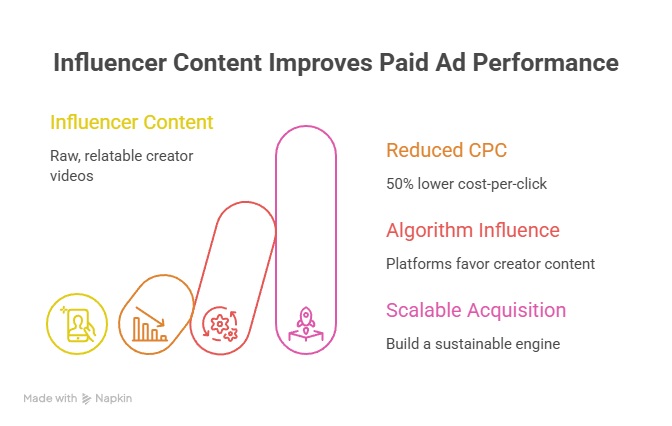
The good news is that you can use authentic influencer marketing to improve your campaigns. When you replace stale brand assets with raw, relatable creator videos, you influence platform algorithms to work in your favor.
In fact, using user-generated content in your paid social ads can reduce your cost-per-click by 50% compared to traditional brand ads.
Keep reading to learn exactly how to build this scalable acquisition engine step-by-step, and explore how these creator assets fit into your broader paid social media advertising strategy next.
Why Influencer Content Drives Higher ROAS
Influencer content drives higher returns because it feels like organic engagement. It bypasses the psychological filters users have when viewing obvious advertisements. When you run traditional, highly polished ad creatives with high visual appeal, this often results in audiences scrolling past them on social media.
In contrast, raw, relatable, and conversion-focused creator formats blend naturally into digital feeds.
That said, while influencer assets scale well, they can fatigue faster than studio shoots because they rely on social media trends, which you can monitor using social listening tools. This means you need to continually refresh your pipeline and content library.
But the trade-off is worth it. Data shows that TikTok Spark Ads, which amplify native creator posts, have engagement rates that are 142% higher than standard in-feed studio ads.
Replacing commercial aesthetics with authentic influencer content helps you actively lower scroll resistance, which improves your conversion rate and overall campaign performance.
5 Steps to Scale Paid Ads With Influencer Content
You must source, brief, license, test, and scale creator assets to scale paid ads with influencer content. Following these steps helps e-commerce founders achieve higher ROAS by turning unpredictable engagement into reliable conversions. Let’s start with how to source creators for content.
Step 1: Source Authentic Creators and Micro-Influencers
Sourcing authentic creators is about finding social media personalities whose digital footprint aligns with your target demographics and prioritizing community trust over follower numbers. For e-commerce founders, for instance, the best move is to build a content library for paid media ads by avoiding expensive celebrities and focusing on micro-influencers.
While managing multiple small creators is more tedious than hiring one macro-influencer, research shows that Instagram micro-influencers have average engagement rates of 3.86%, which outperforms larger content creators.
It’s worth filtering candidates by their comment quality rather than view counts, as this is a fast way to find brand advocates who actually convert. To streamline sourcing, partner with a paid media agency to find ideal partners.
Here’s what to evaluate when vetting candidates for influencer marketing campaigns:
- Look for consistent engagement rates by prioritizing consistent interactions over viral spikes.
- Verify audience overlap to ensure their followers look like your buyers.
- Pick content creation styles that naturally complement your ad creative.
Step 2: Brief Creators for Direct Response
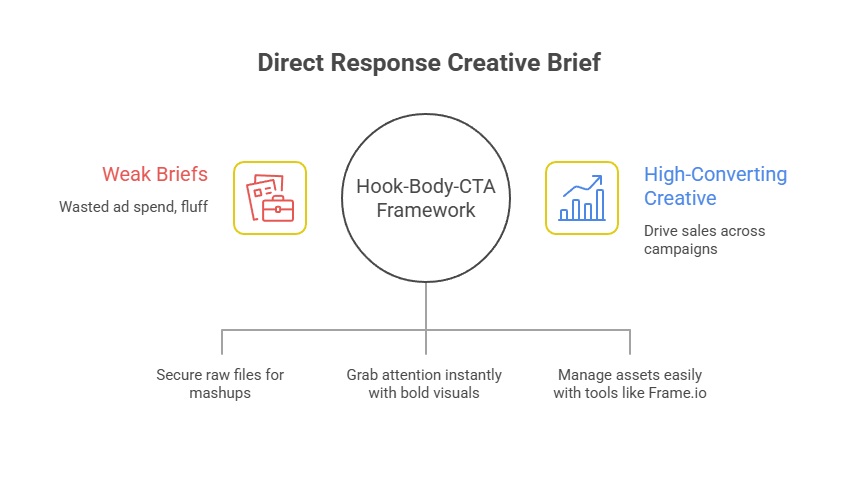
When it’s time to brief creators for direct response, you have to put aside your traditional brand story. Instead, focus on a hook-body-CTA framework designed for conversions. Weak briefs will only waste your ad spend by producing fluff at the top of the funnel instead of the high-converting creative you’re seeking to drive sales across social and paid search campaigns.
In your brief, explicitly require that creators deliver raw, unedited video clips alongside their final cut. Securing these raw files and the necessary content rights is crucial because it allows your internal team to edit high-impact creator mashups later on.
Yes, managing raw footage demands more storage and adds a layer of post-production work to the content creation process. But it helps extend the lifespan of your assets. Plus, using a collaborative review tool like Frame.io makes managing these assets easy
To instantly grab consumers’ attention, request creators use a disruptive 3-second hook in these creative formats. For example, they should combine a bold visual (e.g., pouring coffee on a “stain-proof” shirt) with an audio hook like, “Stop buying clothes that ruin your day.”
Step 3: Use Creator Allowlisting (Whitelisting)
Creator allowlisting is how you get permission to run paid media directly through an influencer’s handle. For performance marketers, this lowers CPAs because consumers don’t view these ads from real people with skepticism. They appear as native social proof.
It’s important to secure these rights early, as it prevents launch delays. So you must include content licensing in initial contracts. And ensure you negotiate 30-to-90-day access upfront.
The campaign setup is straightforward: for Meta Partnership Ads, creators tag your business to grant your ad account permission to run dark ads. On TikTok, they toggle ad authorization to get a code for Spark Ads.
This change results in impressive ROI. Adding Partnership Ads to your standard campaigns drops your cost per acquisition by 19% and improves click-through rates by 53%.
There is a drawback, though. Managing multiple access codes can create logistical bottlenecks regarding expiration dates. But the gains outweigh the administrative effort.
Step 4: Test Modular Creative Assets and Iterations
Testing modular creative assets involves separating videos into isolated pieces: hooks, main bodies, and calls-to-action for quick A/B testing. For e-commerce founders and paid social managers, this approach replaces guesswork with data, which reveals the visual combinations that form high-converting creatives before budgets are wasted.
To prevent algorithms from skewing early delivery, you’ve got to launch multiple iterations at once to broad audiences. The caveat is that this requires a good amount of content repurposing and upfront ad spend to reach statistical significance.
Track these campaign performance metrics using custom columns in Meta Ads Manager to keep things on track:
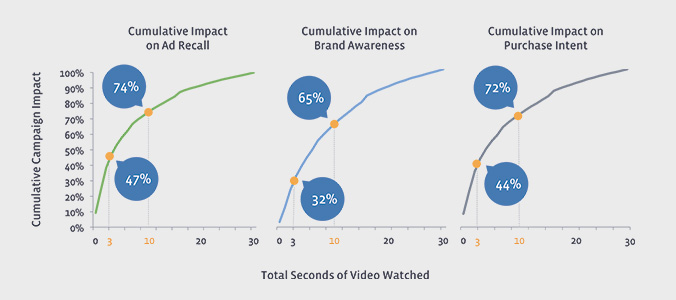
- Check your hook rate by dividing 3-second plays by impressions and multiplying it by 100. Because Meta’s official data shows that 47% of a video ad’s total value is delivered in the first three seconds, calculating your hook rate is important. If your opening frame doesn’t hook viewers, that means you need to swap in a new opening frame.
- Measure your hold rate by looking at the percentage of viewers who stick past 3 seconds. Aim for 30-50%, but note that it differs per platform. A huge drop-off could mean that the ad’s body didn’t deliver the hook’s promise.
Step 5: Scale Winning Ads and Optimize for ROAS
Scaling winning ads means predictably increasing your ad spend on top-performing assets while managing frequency caps to prevent performance decay. If you want to be successful here, you’ve got to balance aggressive budget expansion with the creative fatigue that display or video ads often battle.
Follow this 20% budget scaling formula to shift your budget vertically without resetting platform algorithms: raise budgets on winning ad sets by no more than 20% every three days.
While pacing your scaling limits overnight growth, it helps keep the algorithms stable. Because creator content burns out fast in Facebook feeds, you need to proactively refresh creatives when your 7-day frequency hits 2.5 to maintain low customer acquisition costs.
Then, evaluate your entire paid media funnel by checking post-click metrics like add-to-cart rates to ensure your retargeting pools capture genuine buyers.
Top Creative Formats for Influencer Ads
When you transition from polished studio shoots to influencer content, handing creators an open-ended brief contributes to wasted ad spend. Instead, you need to provide proven frameworks that natively drive conversions on platforms like TikTok and Meta. Ensure the creators stick to specific narrative structures to speed up the content creation process and provide predictable results for campaigns.
Test these reliable formats with your creators:
- Ask creators to visibly demonstrate a common frustration in the first three seconds before introducing your product as the immediate fix.
- Have influencers contrast your product against a generic alternative. They should highlight differences in quality or effectiveness to create an authentic comparison narrative.
- Request a quick listicle format where the creator breaks down the top three reasons why they use your product daily.
Here’s a quick reference guide on how to build these formats.
| Creative format | The visual hook | Why it converts |
| Problem/solution | Demonstrating a frustrating, common pain point. | Hooks your target buyer by calling out a daily frustration they actively want to fix. |
| Us vs. them | Side-by-side product split screen. | Gives instant, visual proof that your product works better than generic alternatives. |
| The quick listicle | “Top 3 reasons I switched to [Product].” | Uses fast pacing to maintain a high hold rate. |
While these structured formats make it incredibly easy to scale your paid media campaigns, they can sometimes feel formulaic if overused. To prevent creative fatigue, use trend discovery tools like the TikTok Creative Center to monitor current audio and visual styles of top-performing ads. Then, layer these fresh elements over your proven structural frameworks.
Common Pitfalls to Avoid When Repurposing UGC
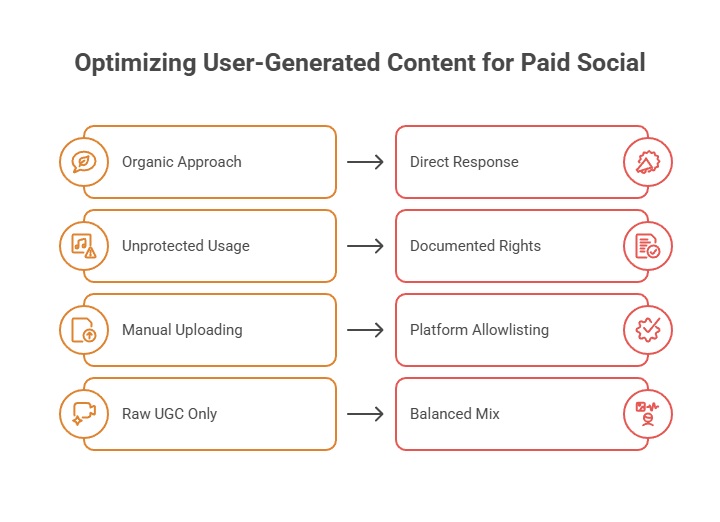
Repurposing user-generated content is effective. But just downloading an organic influencer post and putting paid spend behind it without modifying it is a fast way to waste your budget. A mistake many paid social media managers make is treating paid media the same way they treat organic social media.
So, avoid failing to scale your campaign. Instead, edit organic content for direct response. This is because organic posts tend to have slow, conversational introductions that build community. In contrast, paid ads require immediate, aggressive hooks to stop the scroll.
Another pitfall is overlooking content licensing and intellectual property rights. If you repurpose a creator’s video or audio without explicit, documented permission, you risk having your ad account suspended or facing legal action.
You can avoid this by:
- Securely managing your creator contracts and usage rights through digital agreement tools like DocuSign.
- Using platform-approved allowlisting methods rather than manually downloading and re-uploading videos.
- Ensuring your ads comply with the FTC’s endorsement guidelines, which mandate clear partnership disclosures even when you repurpose the content.
Leaning into user-generated content cuts your creative production costs and improves engagement rates, but you do lose some tight control over a polished brand story. To balance this, mix raw influencer content with high-quality studio assets across your paid social ads.
Maximize Paid Ad ROI With Influencer Content
If you aren’t running user-generated content, you are losing ground to competitors who are enjoying lower CPAs than they did with traditional studio ads.
Ultimately, using authentic creator assets is how you cut creative production costs. It also helps you dominate paid social by feeding algorithms what they need to optimize your lookalike audiences.
One drawback is the administrative heavy lifting required to manage licensing and raw files for dozens of creators simultaneously. But waiting for your metrics to tank before you start sourcing is a much more expensive mistake.
Make the right call. Secure your ad targeting by getting the actionable growth strategies waiting for you at Hawke Media Insights.
Sources
Marpipe – Hold Rate
Bazaarvoice – 64 User-Generated Content Statistics to Know in 2024
TikTok for Business – Your Guide to Automotive Marketing on TikTok
Archive – 23 Micro-Influencer Engagement Rate Statistics Every Brand Should Know in 2026
Zeely AI – 11 Ways To Boost Your Meta Ads Hook Rate Without Spending More
Aspire – Insider Tips from Meta: How to Improve Ad Performance with Partnership Ads