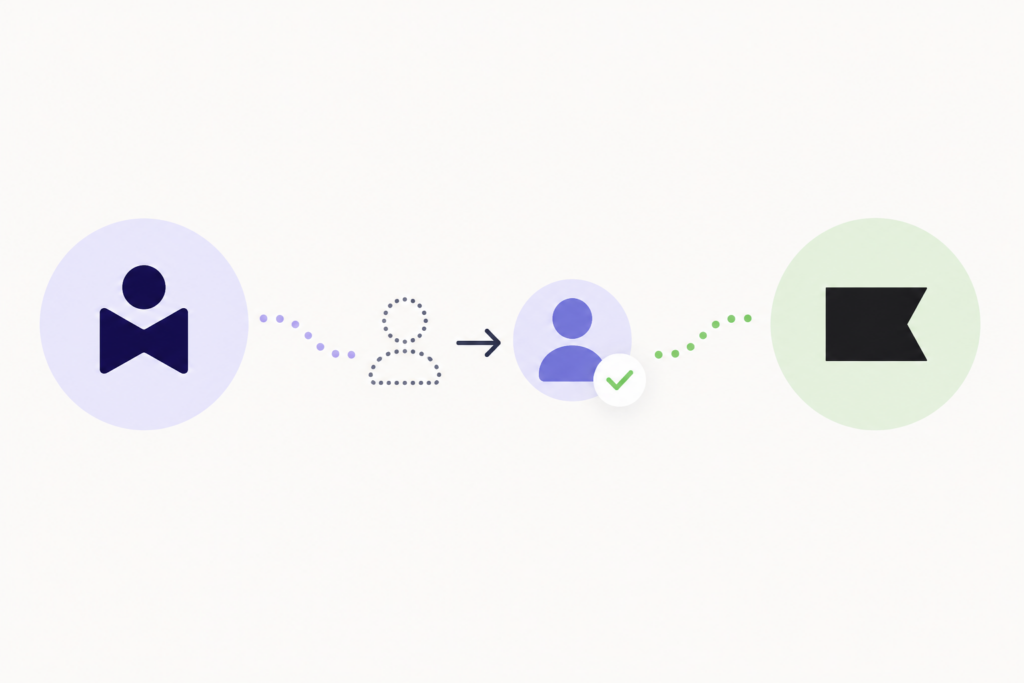
How Smart E-Commerce Brands Are Turning Anonymous Traffic Into Revenue With Tie + Klaviyo
There is a very expensive little ghost haunting most e-commerce brands.
It does not rattle chains. It does not whisper from the attic. It does something far more chilling to a growth marketer: it clicks a paid ad, browses three product pages, adds something to cart, leaves, and vanishes before anyone can get an email address.
That ghost is anonymous website traffic.
For years, brands have treated anonymous traffic as the cost of doing business. Some visitors convert. Some sign up for 10% off. Some leave forever, apparently to “think about it,” which is consumer-speak for “I will now be retargeted by 47 other brands until I buy socks from Instagram at midnight.”
But for smart e-commerce brands, that traffic is no longer invisible. It is an untapped revenue layer.
That is where Tie, formerly Revenue Roll, comes in.
Tie is a Hawke Ventures portfolio company and customer identity platform built to help brands identify high-intent website visitors, grow marketable audiences, and sync those contacts into email and SMS platforms. Its website visitor identification solution helps brands de-anonymize shoppers with names, email addresses, advertising IDs, and demographic attributes, then route that data into the systems marketers already use to drive revenue, including platforms like Klaviyo. Tie describes its solution as a way to “grow your email lists with de-anonymized visitors,” giving marketers a path to identify and act on high-value shoppers faster.
For brands already using Klaviyo, the opportunity is especially interesting. Klaviyo is built as a B2C CRM and marketing automation platform that unifies customer data across email, SMS, mobile push, WhatsApp, RCS, and other customer touchpoints. In plain English: Klaviyo is the engine. Tie helps supply more fuel.
At Hawke Media, where lifecycle marketing, email automation, and e-commerce growth strategy are core parts of the work, this pairing fits a larger truth: brands do not always need more traffic first. Sometimes, they need to do more with the traffic they already paid to get.
What problem does Tie solve for e-commerce brands?
Tie solves one of the most frustrating problems in e-commerce: most site visitors leave before becoming identifiable, reachable, or recoverable.
A brand may spend heavily on Meta, Google, TikTok, CTV, influencers, affiliates, SEO, and PR to drive traffic to the site. Then, once visitors arrive, the brand often has only a few ways to capture them: a pop-up, a checkout account, a purchase, or an existing cookie/profile match.
That leaves a huge gap.
Picture a founder of a premium skincare brand watching a Shopify dashboard after a strong influencer post goes live. Traffic spikes. Product pages are active. Carts are filling. Everyone in Slack briefly becomes a growth expert.
Then the sales number lands flat.
The team knows something happened. They can see the attention. They can see the intent. What they cannot see is enough of the people behind that behavior to follow up with relevance.
Tie’s website visitor identification helps close that gap by identifying visitors who would otherwise remain anonymous, then making those contacts usable inside the brand’s marketing stack. Tie’s own customer stories show brands using it to identify anonymous shoppers, route them into abandonment or browse flows, improve remarketing, and grow email lists without requiring the shopper to stop and fill out another form.
That matters because cart abandonment is still a monster. Baymard Institute calculates the average documented online shopping cart abandonment rate at 70.22%, based on 50 different studies. For every 10 shoppers who add to cart, roughly seven walk away.
A good abandoned cart flow can recover some of that demand. But it can only reach shoppers the brand can identify.
Tie expands the reachable universe.
Why does pairing Tie with Klaviyo matter?
Klaviyo is powerful because it turns customer behavior into automated, personalized marketing. Tie is powerful because it gives Klaviyo more identifiable behavior to work with.
That combination is where things get interesting.
Klaviyo flows are only as strong as the data and profiles feeding them. A beautifully built abandoned cart flow does not matter if a meaningful portion of high-intent shoppers never qualifies for it. A browse abandonment campaign cannot do much with visitors who remain invisible. A win-back sequence cannot win back someone the system fails to recognize.
Tie helps identify more of those visitors and sync them into the brand’s database or email platform. Tie’s grow-email-lists page describes a process where brands place a pixel, configure who to de-anonymize based on behavior and data quality filters, and sync those contacts directly into a database or email platform.
Klaviyo then does what Klaviyo does well: segment, automate, personalize, and measure.
This matters even more because automated lifecycle flows are often among the highest-performing parts of an e-commerce marketing program. Klaviyo’s own abandoned cart benchmark report found that abandoned cart flows drove the highest average revenue per recipient and placed order rate among the flows it analyzed.
So the growth logic is simple:
More identified high-intent visitors means more eligible profiles.
More eligible profiles means more people entering Klaviyo flows.
More people entering strong flows means more revenue from traffic the brand already bought, earned, or influenced.
That is not just list growth. That is traffic monetization.
How does this actually work?
The basic workflow looks like this:
First, a shopper visits the brand’s website. They browse products, add something to cart, view collections, or return after seeing an ad, email, SMS, social post, or offline campaign.
Second, Tie identifies eligible visitors using its identity network and data filters. Tie’s site describes its network as built around public, compliant, and first-party data, with opt-in and opt-out handling built into the process.
Third, those identified contacts can sync into the brand’s marketing platform or database.
Fourth, the brand activates the new data through flows. For Klaviyo users, that can include browse abandonment, product view, add-to-cart, abandoned checkout, replenishment, win-back, post-purchase, and VIP segmentation.
Fifth, the brand measures incrementality and quality, not just raw list growth.
That last step matters.
One of the biggest mistakes marketers make with list growth is treating every email address as equally valuable. They are not. A discount-seeker who typed “10 minute mail” into Google is not the same as a returning customer who viewed a product three times after seeing your new campaign.
Tie’s strongest use case is not “more emails” in the abstract. It is more identifiable, high-intent shoppers whose behavior can inform better follow-up.
The difference is subtle but important. One bloats a database. The other builds a revenue system.
What are brands seeing from Tie?
Tie’s customer stories offer several useful examples of how this plays out across different e-commerce categories.
Caraway, the non-toxic cookware brand, used Tie around a critical BFCM window. According to Tie’s case study, Caraway achieved a 60%+ onsite identification rate, 5.0x+ ROI, $100K+ in incremental revenue, and 42% list growth in the first six months.
That is the kind of result that changes the conversation in a planning meeting. Suddenly, anonymous traffic is not just a reporting line. It is a recoverable audience.
Beekman 1802 offers another useful example because the issue was not just new lead capture. It was returning shopper recognition. Tie’s case study says Beekman 1802 used Tie with its Klaviyo setup to re-identify returning shoppers who were previously slipping through the cracks, with as many as 18% more Klaviyo profiles qualifying for abandoned cart and browse abandonment flows that otherwise would have been missed. The brand ultimately recovered $520,947 in revenue, generated 4,754 orders, and identified 80,000+ new shoppers, according to the case study.
Cozy Earth’s case study shows a slightly different angle. The brand matched 20% to 45% of monthly site traffic, activated Page View, View Item, and Add to Cart flows, and achieved a 15x ROI while keeping deliverability healthy.
G.O.A.T Foods is especially instructive because the case study centers on attribution quality. The brand switched to Tie after frustration with another identity solution and saw $596,383 in net revenue, 10,140 new orders, and 2,520,921 new shoppers identified, according to Tie. The case study also emphasizes transparent attribution, including not taking credit for purchases unless the shopper actually received a campaign based on Tie’s identification data.
That is not a small detail. In performance marketing, attribution can get a little “group project where everyone takes credit for the A.” Transparent incrementality matters.
Why is this especially important now?
Acquisition is expensive, attribution is messier, and owned channels are more important than ever.
Paid media still works, but brands are under pressure to make every click count. Privacy changes, platform volatility, rising CPMs, and fragmented customer journeys have made it harder to rely on one channel or one attribution model. A shopper may see a TikTok, search on Google, visit from Instagram, get distracted by dinner, return from an email, and finally purchase three days later from a desktop browser.
Marketers need systems that recognize intent across that messy path.
This is where lifecycle marketing becomes more than “email sends.” It becomes the connective tissue of the revenue engine.
Hawke Media’s Lifecycle Marketing services are built around email, SMS, loyalty, retention, and customer engagement, all designed to help brands increase revenue and customer value after the first touchpoint. Hawke has also written about scaling email automation, including Klaviyo’s usefulness for e-commerce segmentation and predictive analytics.
Tie strengthens that system by helping brands capture and activate more of the demand they already created.
Think of it this way: acquisition gets people to the party. Klaviyo keeps the conversation going. Tie helps you figure out who walked in before they disappear into the kitchen.
What Klaviyo flows should brands prioritize once Tie is connected?
The first priority should be the flows closest to buying intent.
Start with abandoned cart and abandoned checkout. These shoppers have already shown strong purchase intent. If Tie helps more of them qualify for recovery flows, the impact can show up quickly.
Next, build or refine browse abandonment and product view flows. These work well when the shopper looked at specific products but did not add to cart. The messaging should be helpful, not needy. Think “Still comparing?” or “Here’s what makes this product different,” not “PLEASE COME BACK, WE MISS YOU, WE MADE A PLAYLIST.”
Then, use collection or category intent. A visitor who browses running shoes, espresso machines, or vitamin C serums is telling you something. That behavior can inform segmentation, content, offers, and recommendations.
After that, look at returning customer flows. Beekman 1802’s case study is a strong reminder that not all missed revenue comes from new visitors. Some of it comes from customers the brand already earned but fails to recognize in time.
Finally, use high-intent identified traffic to sharpen paid media. For example, brands can create better segments for retargeting, suppression, lookalikes, and audience analysis. That makes Tie valuable not just for email revenue, but for broader media efficiency.
How should brands protect deliverability?
Visitor identification is powerful, but it should be handled carefully.
The goal is not to dump every possible contact into every possible campaign. That is how brands turn a growth opportunity into an inbox bonfire.
Instead, brands should use filters, intent thresholds, and careful segmentation. Start with high-intent behaviors like add-to-cart, product view, repeat visit, or engaged returning visitor. Suppress recent purchasers where appropriate. Keep frequency caps sane. Watch spam complaints, unsubscribe rates, open rates, click rates, bounce rates, and domain reputation.
Tie’s own customer examples repeatedly highlight deliverability as a concern brands took seriously. Cozy Earth’s case study says the brand increased email volume while maintaining stable domain reputation and inbox placement. Beekman 1802’s case study also notes that Tie’s approach helped maintain deliverability while increasing volume.
The best version of this strategy respects the inbox. It uses identification to improve relevance, not to carpet-bomb people who glanced at a candle once.
What should the email messaging actually say?
The copy should match the shopper’s level of intent.
For a product view flow, the message can be educational: what makes the product different, what customers love, what problem it solves, how to choose the right variant.
For an add-to-cart flow, the message can be more direct: remind them what they left behind, address common objections, clarify shipping or returns, and include social proof.
For returning customers, personalize based on prior behavior. A returning skincare customer does not need the same message as a first-time browser. They may need replenishment timing, routine-building content, or a bundle recommendation.
For high-consideration products, do not rush straight to a discount. A premium furniture brand, jewelry brand, or wellness product may need trust-building first. Use reviews, founder notes, product education, press mentions, guarantees, and comparison content.
The best recovery messages do not feel like a brand chasing someone down the street with a coupon. They feel like a helpful sales associate saying, “You were looking at this. Here’s the thing most people want to know before they buy.”
How can brands get started?
Start by auditing the current revenue leakage.
Look at total site traffic, email capture rate, cart abandonment rate, browse abandonment revenue, paid media spend, returning visitor behavior, and the percentage of traffic that is currently identifiable inside Klaviyo. Then ask a simple question: how much intent are we creating that we cannot currently reach?
Next, evaluate your Klaviyo foundation. If abandoned cart, browse abandonment, welcome, post-purchase, and win-back flows are weak or outdated, fix those before pouring more identified traffic into them. More audience will not save mediocre automation. It will simply expose it faster.
Then, connect the identity layer. Tie’s model allows brands to identify high-value shoppers, apply behavior and quality filters, and sync data into the marketing stack.
After that, launch in stages. Begin with the highest-intent segments, measure incremental revenue, monitor deliverability, and expand thoughtfully.
This is also where working with the right partner matters. Hawke Media is a Klaviyo Platinum Master Partner and provides strategic guidance, technical support, and implementation for email and SMS programs. Pairing the right technology with the right lifecycle strategy is what turns “we installed another tool” into “we built a revenue loop.”
What is the bigger takeaway?
The next wave of e-commerce growth will not come only from finding more people. It will come from recognizing more of the right people and responding to intent faster.
Anonymous traffic used to be accepted as waste. Now, it is becoming one of the most valuable audiences in the funnel.
Tie helps brands identify shoppers who would otherwise disappear. Klaviyo helps brands automate the next best message. Together, they help e-commerce teams turn paid, earned, and owned traffic into a compounding growth loop.
For brands already investing in acquisition, this is the uncomfortable but useful question:
What if the next big revenue opportunity is not hiding in a new channel?
What if it is already on your website, browsing quietly, adding to cart, leaving without a trace, and waiting for your marketing stack to finally catch up?
FAQs
What is Tie?
Tie, formerly Revenue Roll, is a customer identity and website visitor identification platform for e-commerce brands. It helps brands identify anonymous website visitors, enrich profiles with usable customer data, and sync contacts into marketing platforms and databases.
How does Tie work with Klaviyo?
Tie can help identify website visitors who may not otherwise be reachable, then sync those contacts into a brand’s email marketing ecosystem. In a Klaviyo setup, those profiles can then enter relevant flows, such as abandoned cart, browse abandonment, product view, win-back, and returning customer automations.
Why does anonymous traffic matter?
Anonymous traffic represents visitors who are showing interest but are not yet reachable through owned channels. Since the average documented cart abandonment rate is over 70%, brands have a major opportunity to recover more revenue if they can identify and follow up with more high-intent shoppers. https://baymard.com/lists/cart-abandonment-rate
Does this replace pop-ups?
No. Tie should not necessarily replace pop-ups, but it can reduce the brand’s dependence on them. Pop-ups still have a role in capturing explicit opt-ins, offers, quizzes, and first-party preferences. Tie helps identify more visitors beyond the small percentage who fill out those forms.
Which Klaviyo flows benefit most from Tie?
The highest-priority flows are usually abandoned cart, abandoned checkout, browse abandonment, product view, returning customer reactivation, and win-back flows. These are tied to clear behavioral intent and can often produce measurable revenue impact quickly.
How should brands measure success?
Brands should measure incremental revenue, flow revenue, conversion rate, revenue per recipient, list growth, identified visitor rate, repeat purchase impact, unsubscribe rate, spam complaint rate, and deliverability health. The goal is not just a bigger list. The goal is more revenue from better-identified, higher-intent shoppers.