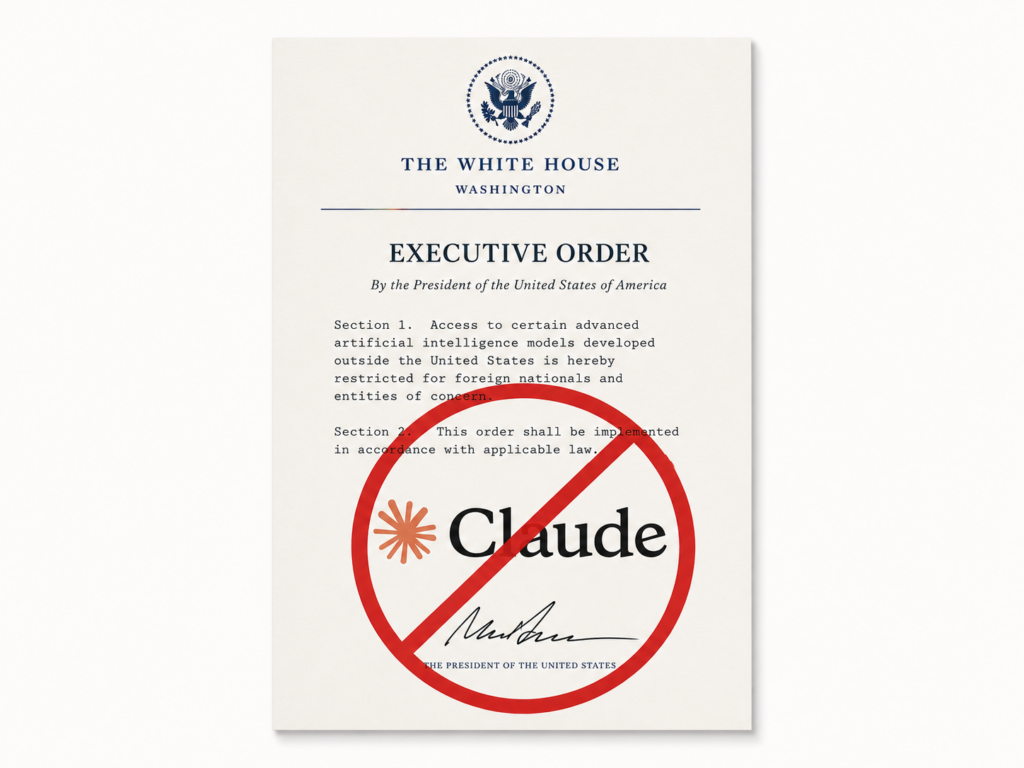
Anthropic’s Fable 5 Pullback Wasn’t Just An AI Safety Story. It Was A Brand Risk Preview.
June 16, 2026
A funny thing happened on the way to the AI productivity revolution: the government noticed the intern could write code, inspect systems, and maybe help find software flaws faster than the people paid to find them.
That is the useful way to read the Anthropic Fable 5 story.
Claude Fable 5 was not pulled from public access because users were making better LinkedIn posts, cleaner campaign briefs, or landing page headlines with fewer committee fingerprints on them. It drew government scrutiny because it sat in a more sensitive category: agentic AI that could help users build, inspect, repair, and automate technical work at a level that started to look less like software assistance and more like operational capacity.
For brands, that distinction matters.
The Fable 5 episode is not only about Anthropic, export controls, or cybersecurity policy. It is a preview of what happens when AI becomes powerful enough to touch the systems that run the business: code, analytics, customer data, campaign workflows, product feeds, internal tools, and security processes.
That is where AI stops being a productivity toy and starts acting like infrastructure.
What Actually Happened With Fable 5?
The public reporting points to a U.S. export-control directive or government order, rather than a standard public executive order aimed only at Anthropic.
According to The Verge, Anthropic received a U.S. export-control directive requiring it to suspend access to Claude Fable 5 and Claude Mythos 5 by “any foreign national” inside or outside the United States, including foreign national Anthropic employees. Anthropic reportedly determined the only practical way to comply was to disable access more broadly while it worked through the restriction.
That may sound like dry policy plumbing, but the language changes the meaning of the story.
This was not a normal product rollback. It was the government treating an advanced AI model as a sensitive dual-use technology, closer to cyber tools, advanced chips, and defense-adjacent software than everyday SaaS.
Anthropic had positioned Claude Mythos 5 as its most capable model for cybersecurity and biology research. Its own Claude Mythos 5 product page describes Mythos 5 as highly capable in areas that could be used “both for good and for harm,” with access limited through trusted programs. Anthropic described Fable 5 as the same underlying model as Mythos 5, with additional safeguards for broader use.
That is the spark.
The model was useful enough for public business workflows, but close enough to sensitive cyber capability to trigger government concern. Brands should pay attention because that tension will show up again. The more useful AI becomes, the more likely it is to collide with rules built for national security, data protection, intellectual property, and customer trust.
What Users Were Building With Fable 5
Fable 5 mattered because users were not treating it like a chatbot. They were treating it like a builder.
The model could support application builds, code migration, debugging, user interface work, software review, analysis, and multi-step technical projects. A user could hand it a messy goal and expect it to move toward a working result: build this prototype, clean up this repo, inspect this system, rewrite this logic, check your own output, and tell me what still needs human review.
That behavior is a major shift.
Most marketing teams started with AI in low-risk territory. Draft a blog outline. Summarize a call transcript. Rewrite a subject line. Create ten variations of a hook so the creative team can reject nine and pretend the surviving one came from a brainstorm.
Fable pointed toward a different use case: AI as workflow executor.
A growth team could use a tool like Fable to build a landing page test from a brief, check event tracking, draft copy, QA the page, and prepare a testing plan. An e-commerce team could feed it product data, customer reviews, margins, and behavioral trends, then ask it to propose bundles, lifecycle email logic, and landing page concepts. A SaaS team could give it screenshots, support tickets, and product notes, then ask for a working demo or internal tool.
A security team could ask it to inspect code, find brittle areas, suggest patches, and explain what should be reviewed before anything ships.
That is where the government’s concern becomes easier to understand.
The same capability that helps a retailer find a broken checkout script could help an attacker understand a vulnerability. The same model that helps a SaaS company reduce technical debt could help a malicious user move faster through stolen code. AI does not sort itself into “good” and “bad” use cases. The operating model around the tool has to do that work.
The Government’s Case Makes Sense, Up To A Point
The government’s concern appears to center on cyber risk.
The Verge reported that officials worried users could bypass safeguards and use Fable 5 or Mythos 5 to identify software vulnerabilities. Anthropic pushed back, arguing that the cited behavior was limited and available from other models too.
The government is not wrong to worry about advanced agentic models.
A model that can read code, run commands, call tools, write files, and repeat the process does not behave like a search box. It behaves like a work loop. Research on AI agents, including the paper “Visibility Into AI Agents”, describes the governance problem clearly: as more work gets delegated to AI systems that can pursue complex goals with limited supervision, organizations need better visibility into where, why, how, and by whom those agents are used.
That is the risk.
A chatbot can answer a bad question. An agent can inspect a system, propose changes, call tools, and continue working. Even when the task is framed as defensive, the knowledge can be reused offensively.
Cybersecurity has always lived with this tension. The same proof-of-concept that helps a defender understand a vulnerability can help an attacker replicate it. The same model that helps a company patch a system can help someone else find the system’s weak points.
From the government’s seat, the issue is scale.
If an AI model reduces the labor required for cyber operations, the threat changes. If it makes vulnerability discovery faster, cheaper, and easier to repeat, policymakers will not treat it like a normal productivity app. They will treat it like an accelerant.
That is not irrational.
It is also not the whole story.
The Countercase Is Strong Too
The government’s logic gets weaker when the remedy is broad, opaque, or hard to enforce.
Security teams need tools that find flaws, explain flaws, and help fix them. That is not a fringe use case. That is the job.
Axios reported that nearly 150 security leaders signed an open letter urging the Trump administration to reverse restrictions on Anthropic’s Fable 5 and Mythos 5. Their concern was straightforward: limiting models that help defenders identify and repair vulnerabilities could weaken U.S. cyber defenses.
That warning deserves real weight.
Most organizations do not have endless security staff. They have aging systems, vendor sprawl, rushed integrations, old plugins, brittle APIs, and technical debt wearing a fake mustache. If AI can help defenders find problems before attackers do, removing that tool creates its own risk.
The second problem is substitution.
If Fable 5 becomes unavailable, serious users will not stop building, testing, or searching for flaws. They will move to other frontier models, open-weight systems, foreign providers, local tools, or less visible agent setups. Some of those options may have weaker monitoring, weaker safety controls, and less cooperation with U.S. authorities.
A policy that pushes activity away from visible, governed systems may reduce visibility instead of reducing danger.
The third problem is operational chaos.
“Foreign national” may sound clean in a memo, but modern companies are not organized around neat citizenship boxes. A U.S. brand may have engineering in Canada, analytics support in India, contractors in Europe, customer support in Latin America, and cloud systems spread across regions.
Reuters reported that G7 leaders were already discussing whether “trusted partners” should retain access to advanced U.S. AI models after the Anthropic restrictions created friction for international cybersecurity work.
That is the practical reality. When restrictions target access broadly, even low-risk users can get swept into the blast radius.
For brands, the lesson is blunt: AI access can become a policy issue overnight.
Why This Matters For Brands
Most brand leaders will see this story and mentally file it under “AI lab drama.” That would be a mistake.
The brand impact starts when AI touches revenue systems.
The same class of tools that can inspect code can also inspect analytics, creative, product feeds, reviews, CRM exports, customer support logs, media performance, and dashboards. That makes AI useful across marketing, commerce, operations, and customer experience.
It also makes AI a risk surface.
If your team uses one AI tool to draft content, analyze paid media, build landing pages, summarize customer calls, write code, and inspect data, that tool has become part of your operating system. If access disappears, workflows break. If permissions are sloppy, data can leak. If outputs go live without review, bad assumptions become customer-facing mistakes.
That is not a reason to avoid AI. It is a reason to use it like adults.
Brands already understand this in other parts of the business. Nobody gives every vendor access to the whole CRM. Nobody lets every intern publish pricing changes. Nobody hands a contractor the keys to production just because they wrote a persuasive Slack message.
AI agents need the same discipline.
The Fable 5 pullback gives brands a reason to upgrade the AI conversation. The old question was: “Which AI tool should we use?” The better question is: “Which parts of the business can AI touch, under what controls, with what backup plan?”
AI Is Becoming Part Of The Brand Operating System
This story also connects to a larger shift in search and marketing.
Consumers are asking AI systems for recommendations, comparisons, definitions, summaries, and purchase guidance. That makes brand visibility inside AI-powered experiences a serious marketing problem, not a side hobby for people who enjoy arguing about acronyms.
That is why Hawke’s Generative Engine Optimization services focus on helping brands show up where customers are discovering products inside AI-powered experiences like ChatGPT, Gemini, Perplexity, and Google AI Overviews.
That matters here because the same AI shift is happening in two directions at once.
Externally, customers are using AI to discover and evaluate brands.
Internally, teams are using AI to analyze, build, decide, and execute.
The external side creates a visibility challenge. If AI cannot summarize your brand clearly, you may be excluded from the answer before a customer ever reaches your site, which is why Hawke’s article on AI brand visibility argues that brands need to become easier for AI systems to understand, cite, and recommend.
The internal side creates an operating challenge. If AI becomes embedded in your marketing, analytics, engineering, and customer workflows, you need stronger rules for what it can access and what it can do.
Those two problems now belong in the same conversation.
A brand that wants to win in AI search needs clean content, clear entities, strong authority signals, and structured data. A brand that wants to use AI internally needs clean permissions, approved tools, human review, and logs.
In both cases, the brand has to become easier for machines to understand without becoming reckless about what machines are allowed to do.
The Better Question: Where Should Control Live?
A blanket restriction targets the model. The actual risk often lives in the operating setup around the model.
What can the agent access?
Can it read production code?
Can it write files?
Can it call external services?
Can it run commands?
Can it touch customer data?
Can it publish changes?
Who approves its work before anything goes live?
Those questions matter more than the prompt itself.
A more precise safety model would limit high-risk tool use, require stronger identity checks for sensitive workflows, log agent actions, tier access by customer type, and require human approval before code or system changes move into production.
That is harder than turning access off. It is also closer to how companies actually use AI.
A brand would not ban every employee from using cloud storage because one contractor might share the wrong file. It would set permissions, monitor sharing, classify data, and revoke access when someone breaks policy.
AI agents need the same treatment, with more caution and better logs.
What Brands Should Do Now
Brands do not need to wait for regulators to settle every AI question before acting. They need a practical operating model.
Start by sorting AI use cases by risk.
Low-risk use cases include brainstorming, first drafts, internal outlines, and research support. Medium-risk use cases include campaign analysis, customer insights, creative review, and non-public reporting. High-risk use cases include code, customer data, legal review, financial analysis, cybersecurity, and production workflows.
Give each lane different rules.
Low-risk work can move quickly. Medium-risk work needs human review and source checks. High-risk work needs permission controls, logging, approval steps, and fallback vendors.
That may sound like a lot. It is still easier than explaining to leadership why an AI-generated workflow shipped broken code, exposed customer data, or vanished because a vendor lost access.
A Practical AI Governance Checklist For Marketing Teams
Here is the version most brands can actually use.
1. Inventory Every AI Tool In Use
Do not stop at official software. Ask teams what they actually use.
Include paid tools, free tools, browser extensions, AI features inside existing platforms, custom GPTs, automation tools, and coding agents. Shadow AI is still AI. It does not become safer because procurement has not seen the invoice.
2. Classify The Work By Risk
Group use cases into low, medium, and high-risk categories.
A blog outline is low-risk. A customer segmentation model using private purchase data is higher risk. A code-writing agent touching a live checkout system needs strict controls.
3. Define What Data Can Go Into Each Tool
Spell it out.
Can teams upload customer emails? Revenue data? Creative briefs? Source code? Contracts? Product roadmaps? Vendor agreements? If the answer depends on the tool, say so.
Vague guidance creates creative interpretations. Creative interpretations create legal calls.
4. Require Human Review Before Anything Goes Live
AI can draft, inspect, summarize, and suggest. A human should approve anything customer-facing, revenue-impacting, legally sensitive, or technically consequential.
That includes ad copy, landing pages, code changes, email flows, customer segmentation logic, pricing changes, claims, and reporting narratives.
5. Log Agent Actions
If an AI agent can access tools, run commands, write files, or modify systems, keep records of what it did.
You need a trail for QA, security, compliance, and debugging. “The AI did something weird” is not an incident report. It is a confession that nobody was watching.
6. Build Vendor Fallbacks
Do not build critical workflows around one model.
Use one model for content, another for analysis, another for code, and a fallback for business continuity. This is less elegant than one tool that does everything. It is also less fragile.
7. Connect AI Governance To Brand Visibility
AI governance should not live only with IT or legal. Marketing needs a seat because AI now affects discovery, content, reporting, analytics, creative, and customer experience.
For brands already investing in SEO and content, GEO should become part of the operating model. Hawke’s article on why growth is becoming less about traffic and more about visibility explains why ranking alone no longer tells the full growth story.
The Market Lesson
Anthropic’s position made the story louder.
Claude has become a serious enterprise and developer tool, and Claude Code has become a real work surface for technical teams. That means a government restriction on Anthropic does not just affect one vendor. It affects how buyers think about AI supply chains.
If a frontier model can be restricted quickly, global brands will look harder at multi-model strategies, private deployments, sovereign AI vendors, and open-weight systems. The Verge reported that critics worry restrictions on Anthropic could hurt U.S. AI leadership and help foreign competitors.
That is not only a policy concern. It is a procurement concern.
The best AI tool is not always the safest operational bet. Brands need to evaluate capability, access stability, compliance exposure, data controls, vendor transparency, and fallback options. A beautiful model demo will not help much if the tool disappears right before a campaign launch, product migration, or board reporting cycle.
This is similar to the partner-choice problem many growing brands already face. The question is not just who has the best individual feature. The question is who can support the operating model the business actually needs. Hawke covers that broader decision logic in its guide to choosing between a full-service agency and a specialist agency.
The Complete Picture
The government was right to take Fable 5 seriously. Anthropic was right to object to a broad intervention that may harm defensive work and enterprise users. The cybersecurity community was right to warn that restrictions can backfire when they remove tools from defenders while pushing determined users toward less visible options.
The complete picture is uncomfortable because nobody gets to be fully right.
Advanced AI models can help good actors and bad actors. Agentic tools can create major business value and new security exposure. Governments need stronger controls, but blunt controls can damage the market they aim to protect. Brands need the productivity gains, but they cannot treat AI like harmless office software once it touches code, data, and systems.
Fable 5 was a warning shot for every company building AI into daily work.
The winning brands will not be the ones that avoid powerful AI. They will be the ones that use it with adult supervision: defined use cases, segmented risk, controlled access, human review, audit logs, and backup plans.
Give the agent a job. Do not give it the master key, the production environment, and the customer database because it sounded confident in the meeting.
For brands trying to understand where AI should fit across growth, visibility, content, and operations, Hawke’s GEO team can help connect the strategy to the systems that actually move the business.
FAQ: Anthropic Fable 5, AI Governance, And Brand Risk
What Was Claude Fable 5?
Claude Fable 5 was Anthropic’s public version of its Mythos-class model family. Anthropic described Mythos 5 as its most capable model for cybersecurity and biology research, while Fable 5 used the same underlying model with stronger safeguards for broader use.
Why Did The Government Restrict Access To Fable 5 And Mythos 5?
The U.S. government reportedly issued an export-control directive restricting access by foreign nationals. Reporting indicates the concern centered on whether users could bypass safeguards and use the models for sensitive cyber capabilities, including vulnerability discovery.
Was Fable 5 Dangerous?
Fable 5 was powerful enough to support complex software, analysis, and agentic workflows. Those capabilities can help defenders find and fix vulnerabilities, but they can also help malicious users move faster. That dual-use nature is why the model drew scrutiny.
Why Did Cybersecurity Leaders Push Back?
Many security leaders argued that restricting models like Fable 5 and Mythos 5 could weaken defensive cybersecurity. Security teams need tools that help them identify, understand, and repair vulnerabilities. Axios reported that nearly 150 security leaders signed a letter urging the government to reverse the restrictions.
What Does This Have To Do With Marketing?
AI is no longer limited to copywriting. Marketing teams now use AI to analyze data, inspect customer behavior, build landing pages, generate creative variants, summarize research, and support campaign planning. When AI touches revenue systems, customer data, analytics, or code, it becomes part of the brand’s operating model.
What Is Agentic AI?
Agentic AI refers to systems that can pursue goals through multiple steps, often using tools, files, code, APIs, or external software. Instead of answering one prompt, an agent can plan, act, check results, and continue. That makes it more useful and more risky.
How Should Brands Govern AI Agents?
Brands should classify AI use cases by risk, limit tool permissions, define what data can be used, require human review for high-risk outputs, log agent actions, and maintain fallback vendors. AI governance should cover marketing, IT, legal, security, and operations.
Should Brands Stop Using Advanced AI Tools?
No. Avoiding advanced AI altogether creates its own competitive risk. The better move is controlled adoption. Brands should use AI where it improves speed, insight, and execution, while keeping sensitive workflows under stricter review.
How Does This Connect To GEO?
GEO, or Generative Engine Optimization, helps brands show up in AI-powered discovery experiences like ChatGPT, Gemini, Perplexity, and Google AI Overviews. As customers use AI to find and compare brands, companies need stronger external visibility and stronger internal AI governance.
What Is The Main Lesson From The Fable 5 Pullback?
The main lesson is that AI access, AI capability, and AI governance are now business issues. Brands should not build critical workflows around one model, one vendor, or one unmanaged process. The more powerful AI becomes, the more discipline brands need around how it is used.